
WAM Inc.
Wamhiba
Solar-powered hydroponic greenhouses in Lebanon, so that what a family eats does not depend on the next distribution.
The name
From mawhiba, gift
Wamhiba is a humanitarian project of WAM Inc. Its name is drawn from the Arabic mawhiba, meaning gift, and the work is the same idea: something planted that keeps giving after the giver has gone.
Relief keeps a family alive this month. It does not change what happens next month. Wamhiba grows food inside Lebanon so that a household is not waiting on the next parcel, and it does it in a country where electricity, currency and supply chains are all under strain.
Why growing, and why here
A country that imports what it eats
Lebanon imports roughly 80% of its food. When the currency lost most of its value, imported food and imported farming inputs went out of reach in the same month.
Agriculture has employed between a fifth and a quarter of the country's workers while producing about 5% of its economic output. That imbalance is why the sector fails first and recovers last, and why the poorest workers in the poorest districts are the ones it takes down with it. Farmers who could not buy seed, fuel or fertiliser cultivated less land, and less land cultivated meant less food at a higher price.
Sources: ESCWA, Strategic review of food and nutrition security in Lebanon; World Bank Lebanon economic monitoring; UNDP rapid poverty assessment. These are published national figures, not WAM programme outcomes.
How it works
Designed for a country experiencing a multi-dimensional crisis
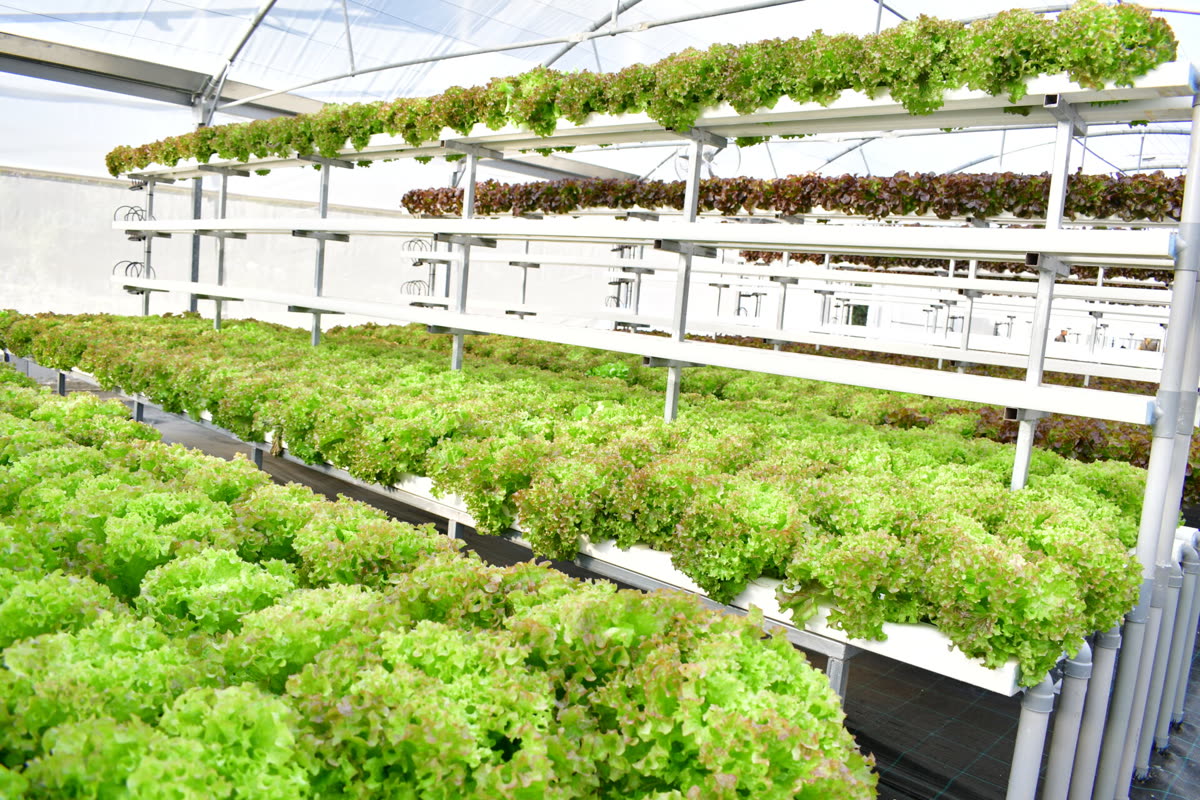
Controlled-environment growing in Lebanon means designing for instability. Extended daily power cuts, summer heat, winter cold snaps, water scarcity and broken supply chains are the operating conditions, not the exceptions.
Solar-powered
The irrigation pumps run off the sun rather than off a grid that is down for most of the day.
Greenhouse, not warehouse
Vertical growing channels inside a greenhouse, so the sun does the lighting. No HVAC-heavy indoor tower to power.
Closed-loop nutrients
Water and nutrient solution are recirculated rather than run to waste, which matters where water is scarce.
Automatic shading
Summer glasshouse temperatures climb steeply; shading and active ventilation hold the crop inside its range.
On donated land
The greenhouses sit on land given for the purpose, so capital goes into growing rather than into acreage.
Biosecurity protocols
A closed system with no soil is only an advantage if it stays clean, so entry and handling are controlled.
The economics
A season that funds the next one
Produce goes to families facing food insecurity. A portion of each harvest is sold, and that income buys the seedlings and supplies for the following cycle.
The point of that structure is that the greenhouse is not a permanent line item on a donor's budget. A gift builds the greenhouse once; the harvest keeps it planted. Local production also does something a food parcel cannot: it lowers what a household spends on food, and it puts the supply inside the country rather than at the end of an import chain that has already failed twice.
Wamhiba's own site
wamhiba.com
Farm notes, produce and the growing record live on Wamhiba's own site.
Wamhiba is an operating name of WAM Inc. A gift made at wamhiba.com is received by WAM Inc. and is tax-deductible in the United States to the extent permitted by law.
Witness As Ministry, Dovetail Global Aid and Wamhiba all operate under WAM Inc., a 501(c)(3) organization and the legal recipient of all funds. One entity, one EIN, one IRS determination. A gift made under any of the three names is a gift to WAM Inc.
Stand with us
Partner
For churches and partnership enquiries, contact Partnership Development.
Start a conversationPray
For the families WAM serves, for the congregations walking beside them, and for the staff who stay when others go.
Read what to pray forTogether, we can provide Care Beyond Crisis.